Kayaking to Antelope Canyon: The Water Route from Antelope Point
The lake-side way into the canyon: paddling Lake Powell from Antelope Point, why no Navajo guide is required on the water, and how low water changes the trip.
 By Daniel Begay, Navajo guide & Southwest canyon specialist
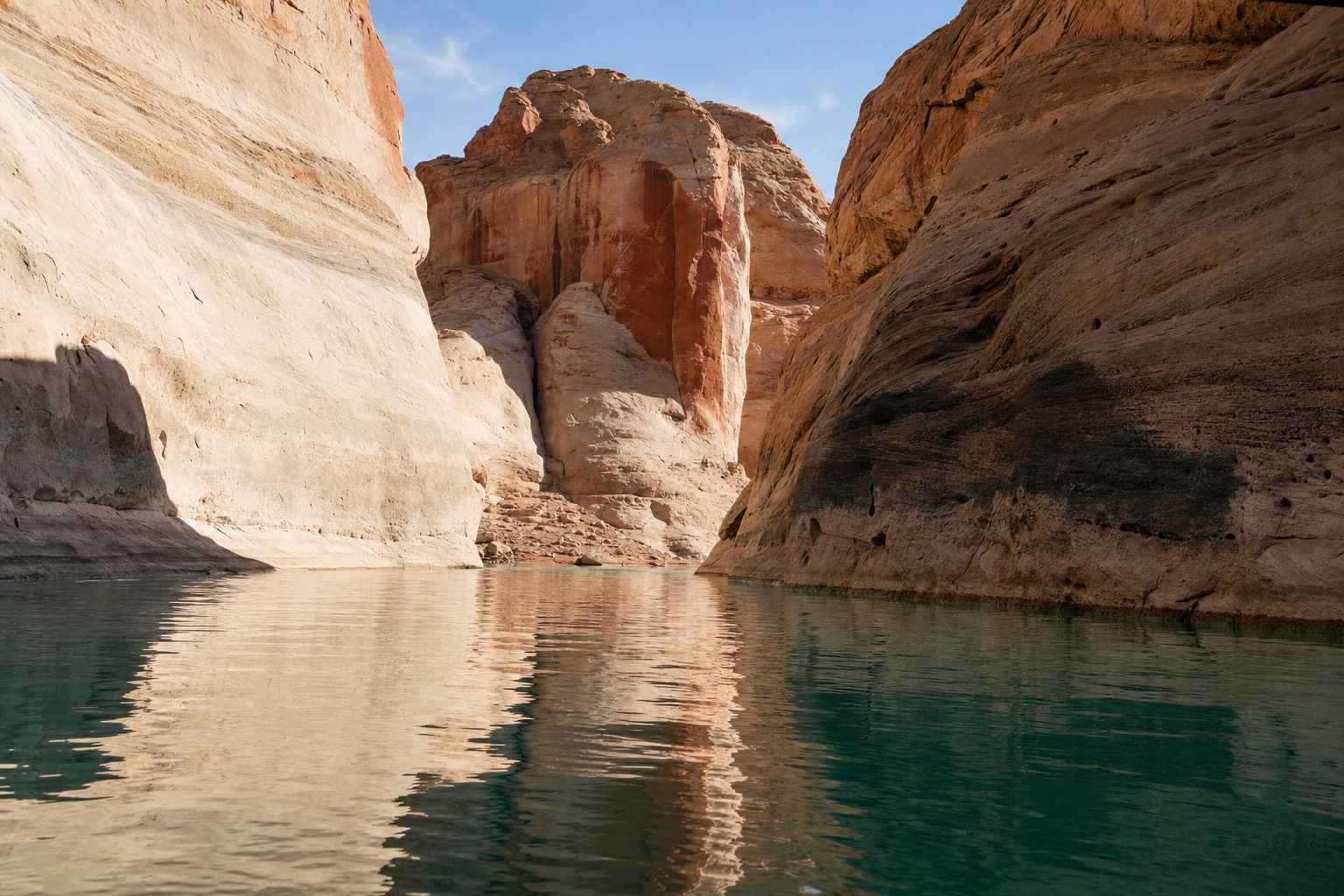
Most people picture only one way into Antelope Canyon: a truck, a Navajo guide, a walk between glowing walls. There is a second door, and it opens from the water. The canyon runs downhill to Lake Powell, and where it meets the lake you can paddle straight into its mouth. I have spent enough years explaining land rules on the Navajo Nation to find the legal geography here genuinely interesting, so I mapped it properly before writing a word.
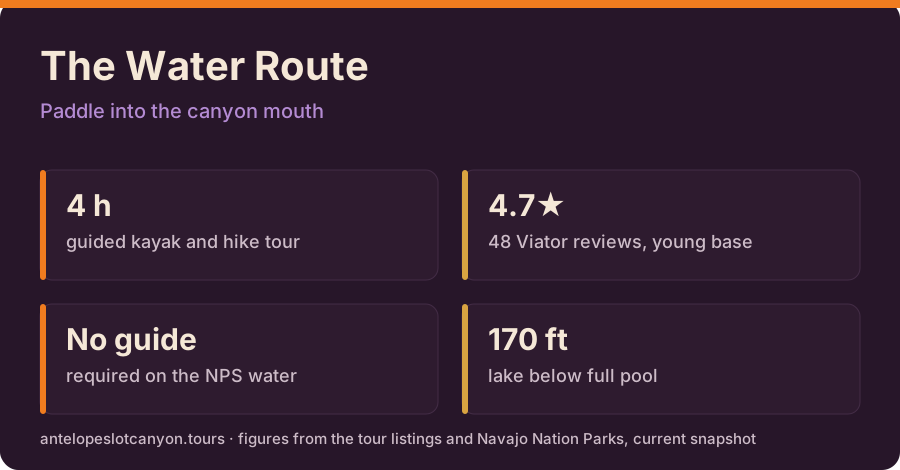
Quick take: the water route starts near Antelope Point on Lake Powell, inside Glen Canyon National Recreation Area, which is National Park Service water. No Navajo guide is required out there. A 4-hour Viator kayak-and-hike tour covers the paddle, a hike into the lake-side canyon, and an optional swim. It is a different animal from the slot walks, not a substitute.
Can you really kayak to Antelope Canyon?
Yes, to its lake end. Antelope Canyon's wash meets Lake Powell near Antelope Point, and kayakers paddle into the canyon mouth from the water, then continue on foot as far as conditions allow. What you reach is the lake-side canyon, not the famous guided slot corridors upstream.
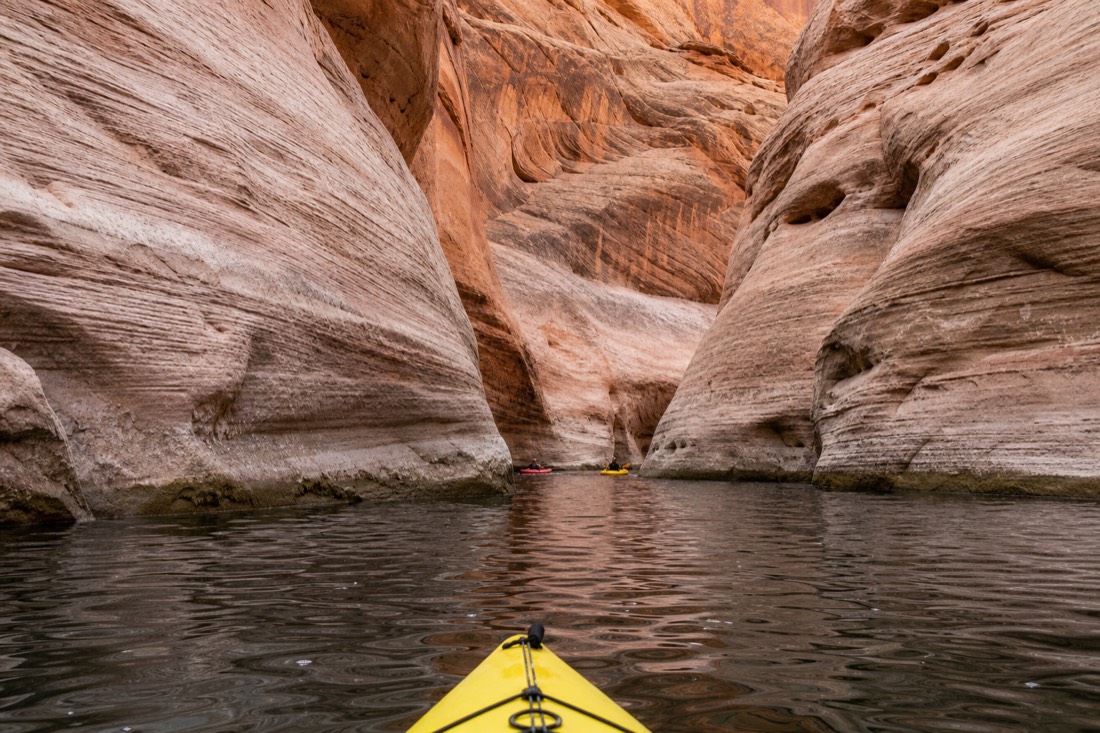
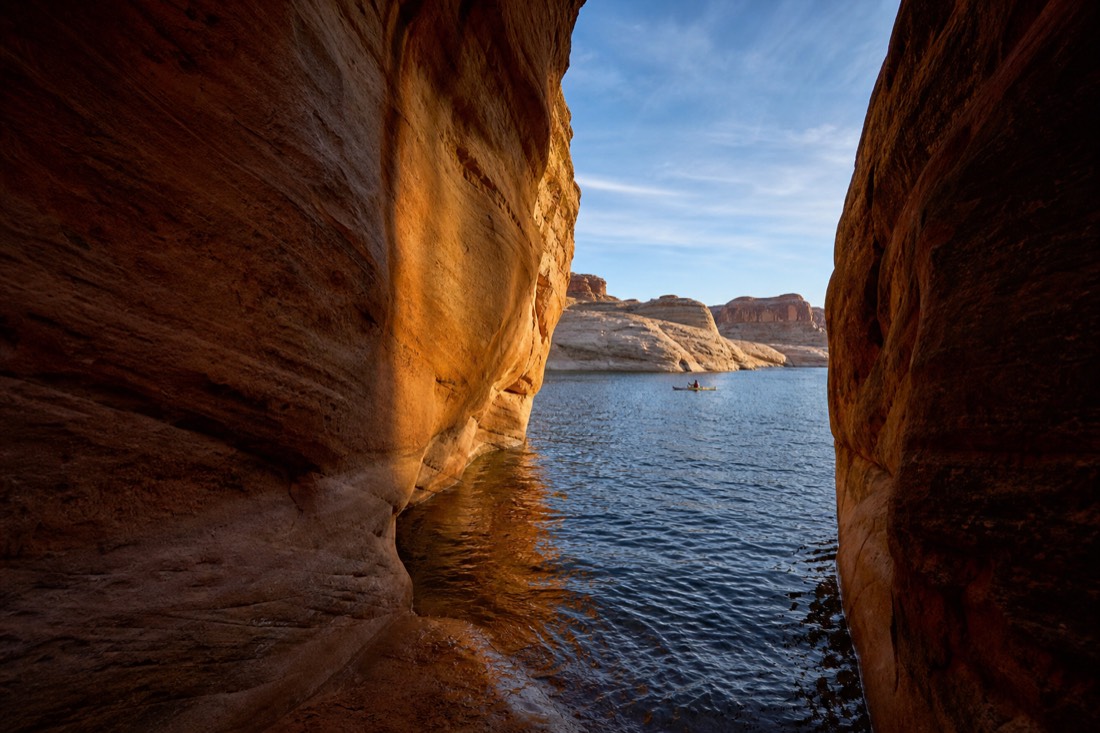
Geography first. The same drainage that carved Upper and Lower Antelope keeps going until it drowns in the reservoir. Paddle across from the Antelope Point area and the cliff walls slowly close in around your boat: sandstone rising straight from the water, narrowing the way a slot narrows, until the lake runs out and sand begins. From there, people beach the boats and walk up the wash between rock walls that grow tighter the farther they go.
Manage your expectations honestly, because I will not oversell this. The corkscrew chambers on the postcards belong to the guided walking sections on Navajo land upstream. The water route trades those sculpted rooms for something the walking tours cannot offer at any price: approaching the canyon under your own power, with the paddle itself as half the show.
Why is no Navajo guide required on the water route?
Because you are on different land, or rather different water. Lake Powell and its shoreline sit inside Glen Canyon National Recreation Area, managed by the National Park Service. The guided-only rule applies to the canyon sections on Navajo Nation land, which is exactly where the kayak tour does not go.
This boundary deserves careful words, so here they are. Every walking section of Antelope Canyon, Upper, Lower, X and their siblings, sits on Navajo Nation land where Navajo Nation Parks & Recreation requires an authorized guide, full stop, no self-visits, plus the $15 per person permit. The lake is a different jurisdiction: Glen Canyon National Recreation Area, federal NPS water with its own entrance fees and boating rules. The kayak tour operates on that NPS side, which is why the listing carries no Navajo guide and never claims one.
The line matters in both directions. The water route is not a loophole into the guided slots, and drifting from "kayak trip" into "self-guided slot walk on tribal land" is exactly the move that gets visitors in trouble. I cover the broader access question in can you visit without a tour, and the short answer stays the same: on Navajo land, no.
| Route | Land manager | Guide requirement |
|---|---|---|
| Upper, Lower, Canyon X slot walks | Navajo Nation | Authorized Navajo guide, mandatory |
| Lake Powell paddle + lake-side canyon | NPS, Glen Canyon NRA | No Navajo guide required |
| Everything in between | Boundary country | Know which side you stand on |
What is the 4-hour kayak and hike tour actually like?
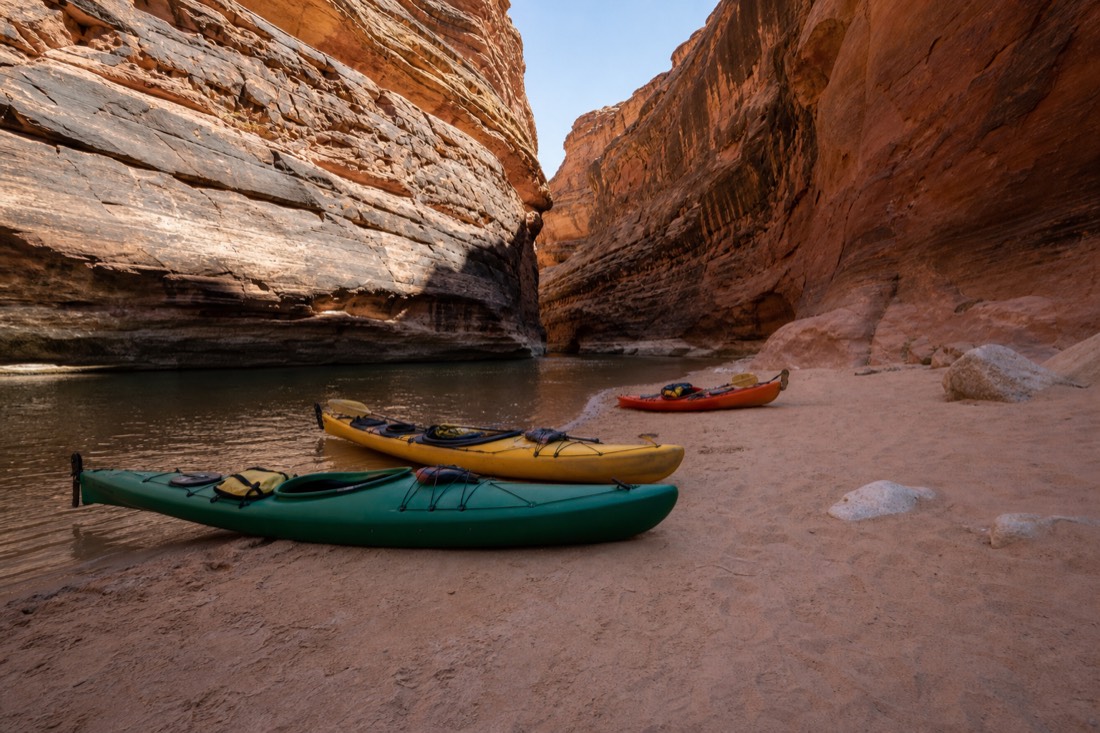
The Viator product runs about four hours: guided paddling from the Antelope Point side, a hike up the lake-side canyon, and an optional swim, with free cancellation. It holds a 4.7 from 48 reviews, a small but strong base, and the live price sits on the listing.
The tour in one table, straight from the listing:
| Detail | What the listing says |
|---|---|
| Duration | About 4 hours |
| Rating | 4.7 from 48 Viator reviews |
| Swim | Optional, bring what you need |
| Cancellation | Free cancellation |
| Style | Guided paddle plus canyon hike |
I want to flag that review count honestly, since I refuse to dress up small numbers. Forty-eight reviews is a young base compared to the thousands on the walking tours, and 4.7 across it means consistent satisfaction rather than statistical bedrock. A GetYourGuide kayak alternative exists too and carries a Top rated badge, though I have not verified its review figures, so I will not quote any.
Four hours also tells you the fitness ask. This is a real paddle in open desert sun followed by walking on sand. Reviews of every Page activity repeat the same physical themes: heat management, water, real shoes. Sunscreen matters more on the lake than anywhere in the slots, because out there nothing shades you.
How do Lake Powell's water levels change the trip?
A lot, year to year. Current monitoring puts the lake around 3,524 feet elevation, roughly a quarter of full capacity and about 170 feet below full pool. Levels shift where the water ends and the hiking begins, so the paddle-to-hike ratio you get depends on the year you show up.
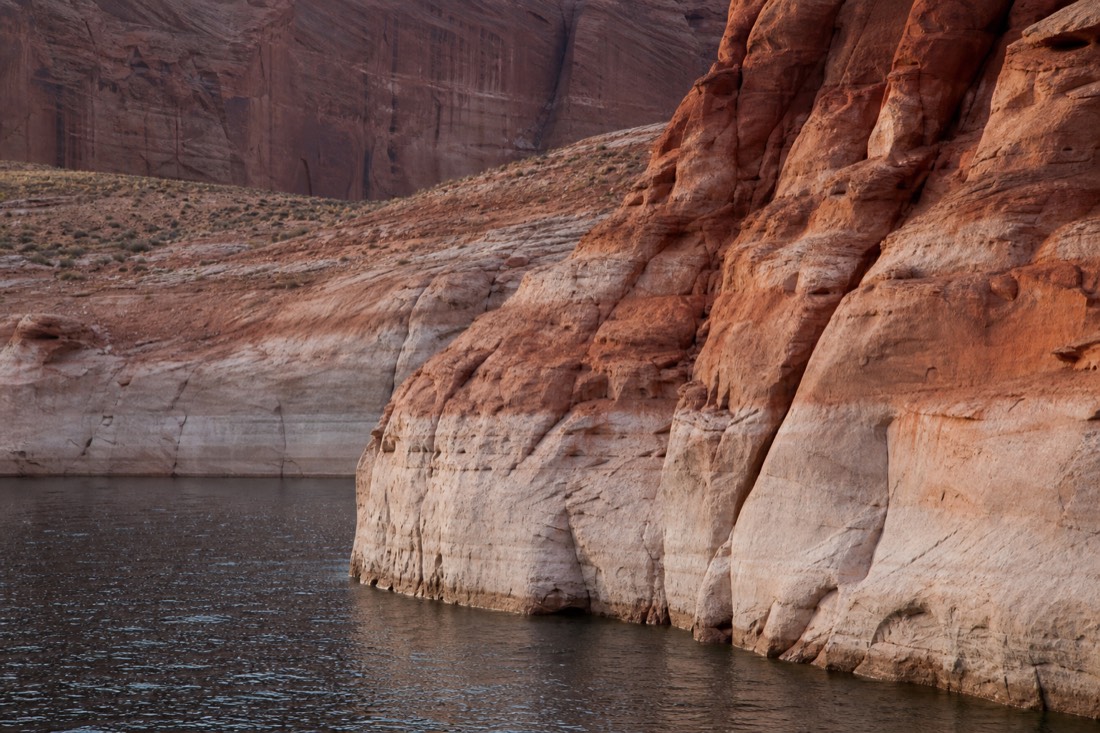
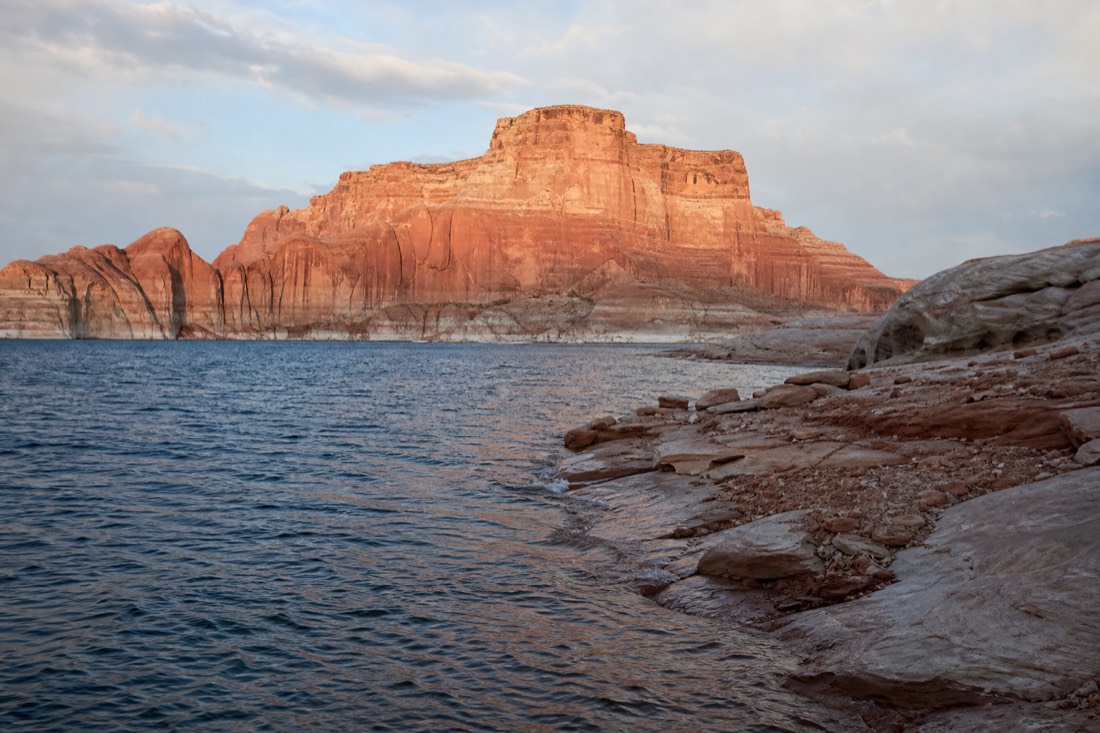
You cannot plan a Lake Powell trip in 2026 without meeting the elephant: the reservoir is low. The white bathtub ring on the cliffs is the lake writing its own history lesson, and the numbers behind it are stark enough that I put them in this article's data block below. For a paddler the practical meaning is simple. Lower water moves the shoreline, changes launch conditions, and lengthens or shortens the hikeable wash beyond the waterline.
None of that cancels the trip. It changes it, differently each season, which is why operators run the current version of the route rather than the one in old photos. Check conditions with the NPS Glen Canyon pages and the operator close to your date. I dig deeper into the marina side of the lake in the Antelope Point and Lake Powell day post.
How does the water route compare to the slot canyon walks?
Different products for different appetites. The walks deliver the sculpted corridors and Navajo guiding culture in about an hour; the kayak delivers open water, effort, and a half-day arc with a swim. Photographers and first-timers should walk. Repeat visitors and active travelers should seriously consider the paddle.
The two experiences, laid side by side:
| Slot canyon walks | Kayak water route | |
|---|---|---|
| Time commitment | About 1 hour inside | About 4 hours |
| The scenery | Sculpted corridors, glowing walls | Open lake, cliffs, lake-side canyon mouth |
| Effort level | Easy walk (stairs at Lower) | Sustained paddling plus sandy hiking |
| Extras | Navajo guiding and cultural stories | Optional swim, half-day arc |
My honest sorting, as someone who has watched a lot of travelers pick wrong: if this is your first time in Page and you have one slot in the schedule, take a guided walk, because those corridors are the reason you came. Read what the Lower walk is really like and you will feel whether it is your kind of hour. The kayak is the perfect second act: day one underground in the slots, day two on the water earning your canyon by paddle.
If the water version is calling you, the details live on the kayak tour page, and you can check live availability and prices on Viator for the 4-hour kayak-and-hike with the optional swim.
What should you check before you launch?
Four things: current water levels and launch conditions on the NPS side, the day's heat and monsoon forecast, your own paddling honesty, and your booking's cancellation terms. Summer storms that close the slot canyons make open water unpleasant too, so watch the same sky everyone else does.
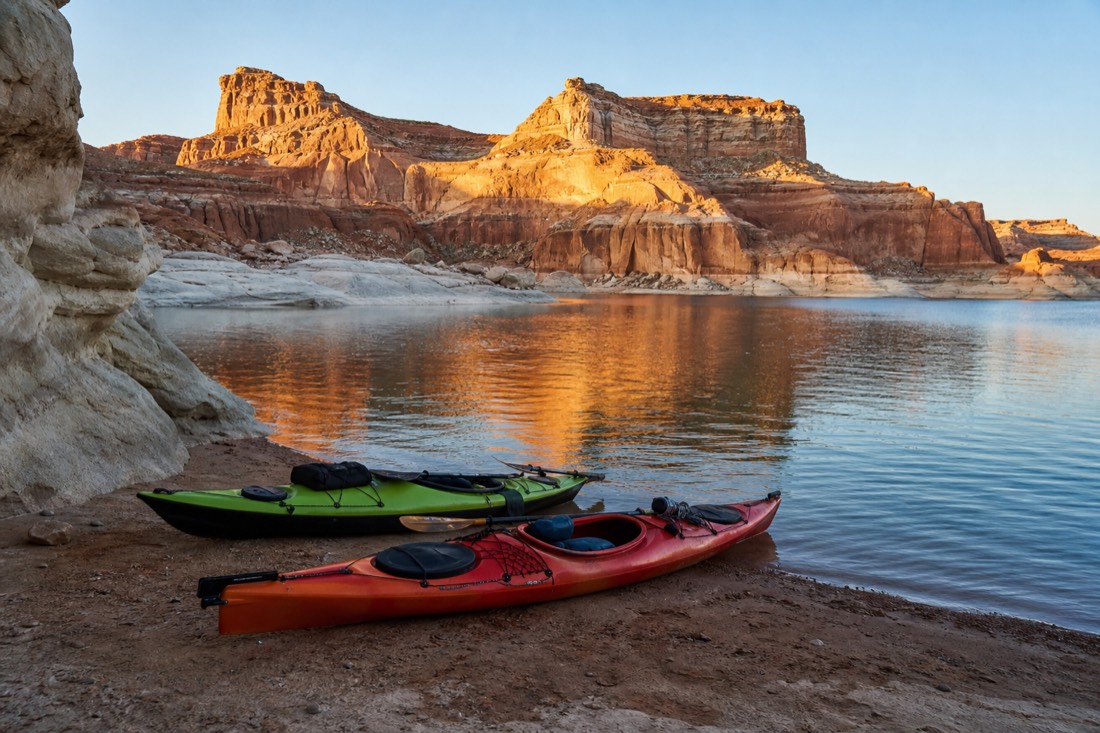
Monsoon season, mid-June through September, writes the fine print for every outdoor plan in this corner of Arizona. The same distant storm that cancels a slot tour for flash-flood safety can churn the lake an hour later. Book with free cancellation, hold the morning slot, and let the desert have its veto. It always did anyway.
Your next booking step
Antelope kayak and hike
Have a travel date in mind? Four hours combining Lake Powell paddling and a walk into Water Antelope Canyon. Kayak, paddle, life jacket and dry bag supplied. Check the date before arranging the rest of this part of your trip.
General starting point — confirm the exact party and date
Select a date to load the Viator schedule. Availability and final price are confirmed on Viator.
Check dates for Antelope kayak and hike
Use the launch location in your confirmation; arrive 30 minutes early. Return paddle to the launch. Choose the four-hour kayak-and-hike option. Ages 5+; bring water and food. National Park Pass and tips extra. Not Upper or Lower; not recommended during pregnancy or with spinal/cardiovascular conditions.
Compare routes, adjust your plan & budget
The lake-side way into the canyon: paddling Lake Powell from Antelope Point, why no Navajo guide is required on the water, and how low water changes the trip. These are different experiences, not interchangeable admission tickets. All listed guiding is in English.
Four hours combining Lake Powell paddling and a walk into Water Antelope Canyon. Kayak, paddle, life jacket and dry bag supplied. 240 minutes; English; from Page. Use the launch location in your confirmation; arrive 30 minutes early. Return paddle to the launch. Choose the four-hour kayak-and-hike option. Ages 5+; bring water and food. National Park Pass and tips extra. Not Upper or Lower; not recommended during pregnancy or with spinal/cardiovascular conditions.
A timed walk among Lower’s sculpted walls, with entry and the Navajo permit included. 60 minutes; English; from Page. Ken’s Tours, Lower entrance; arrive 30 minutes early. Return to the same site. Steel stairs and narrow passages; no bags or tripods. Not recommended during pregnancy or with spinal/cardiovascular conditions. Customer cancellation: full refund at least 24 hours before departure; reconfirm at checkout.
A five-hour guided float through the Colorado River corridor below Horseshoe Bend. 300 minutes; English; from Page. 199 Kaibab Road, Page; arrive 45 minutes early. Confirm the operator’s return transport. Ages 4+. National Park entry and lunch extra. River route, not Lake Powell or slot admission. Accessibility statements differ between API and public bus details: arrange access with the operator before booking.
Affiliate links: we may earn a commission at no extra cost to you. Schedule dates are not confirmed seats.